01
Read the line
Le Cordon Bleu includes éclairs within its choux teaching alongside other finished forms. That shared family is a useful starting point for a visual study. An elongated silhouette draws attention to a line: its continuity, its ends and the way a finish travels across it.
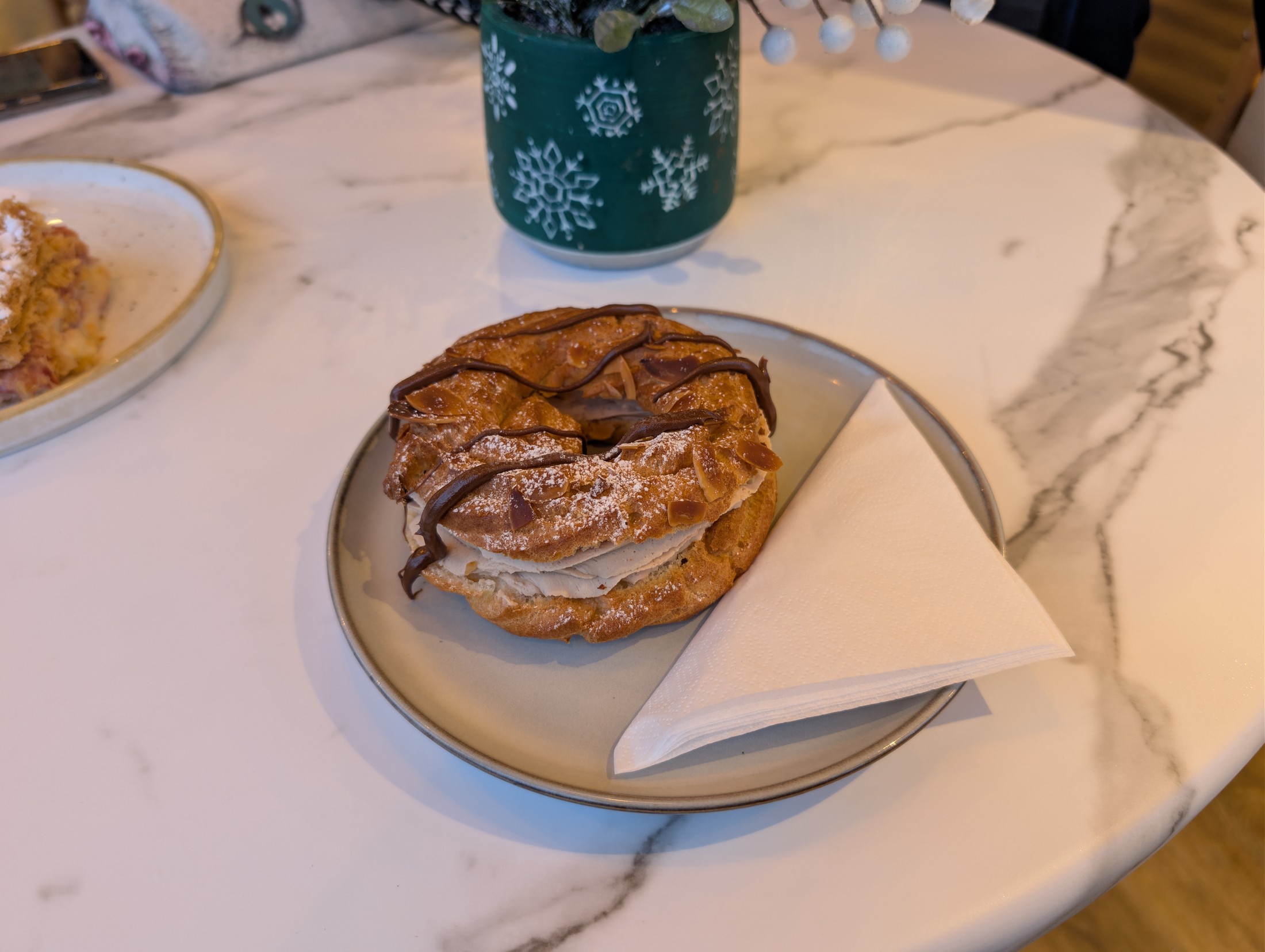
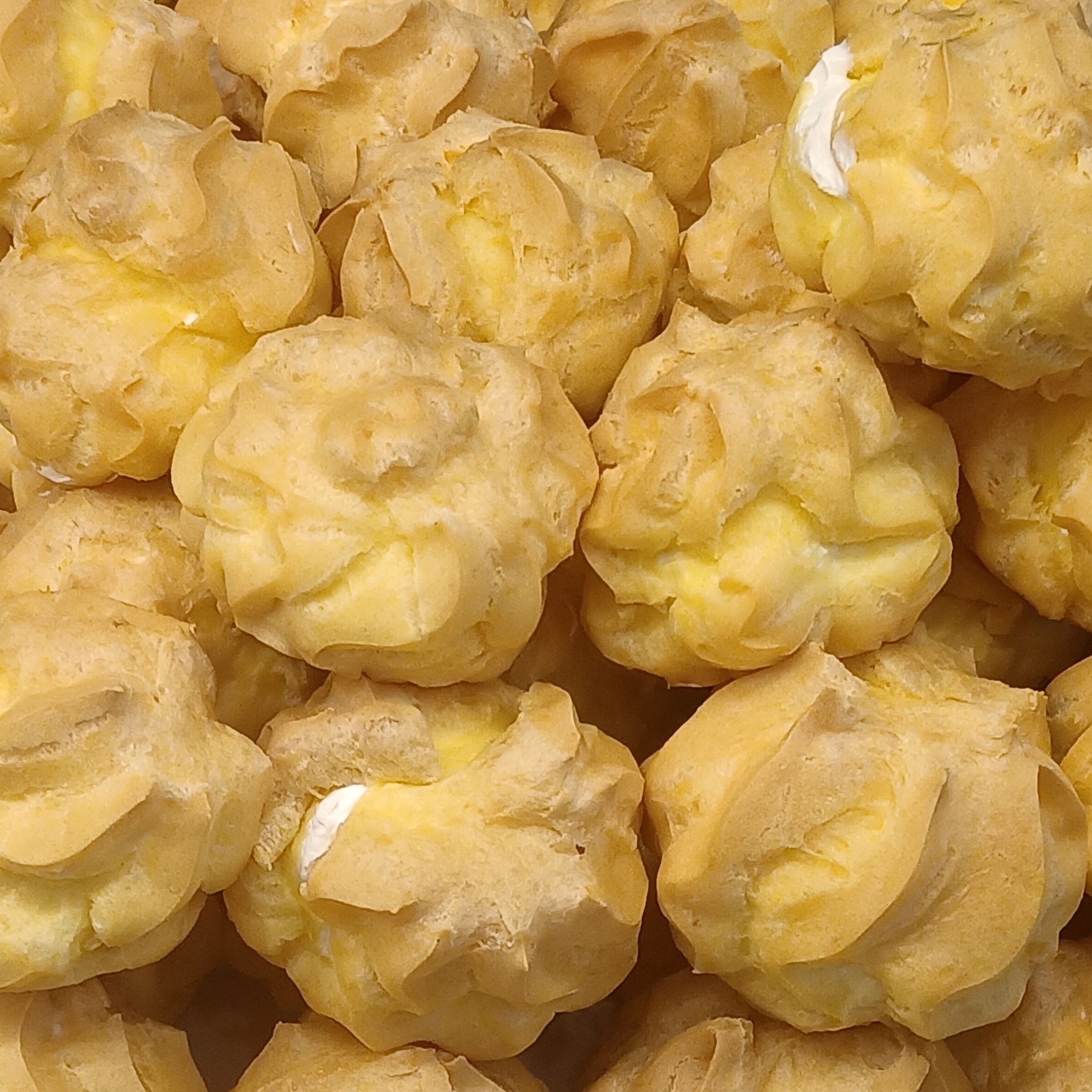
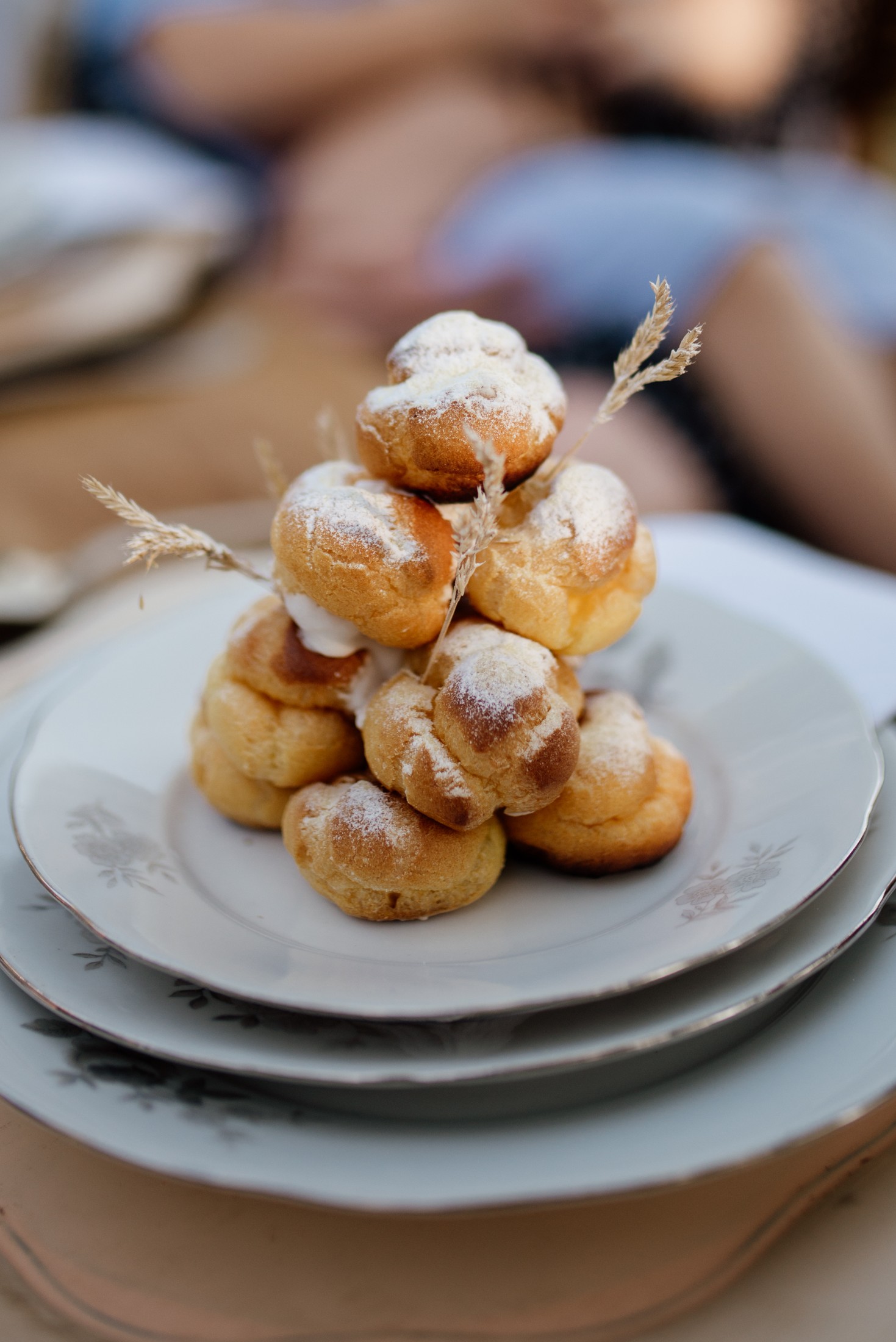
Compare two reference photographs without assuming that they follow the same recipe. Describe the arrangement of the finish and where the eye lands first. A form study can ask what an image communicates while leaving technical interpretation to the appropriate practical context.
02
Let the finish belong
A finish can emphasise the length of an éclair or interrupt it. There is no need to turn that observation into a rule that every piece must look the same. Ask whether the intended composition is clear and whether each addition serves that intention.
Try sketching a simpler version before discussing an elaborate reference. The sketch may reveal that the central idea depends on shape and proportion rather than the number of decorations. It gives a teacher or collaborator something specific to respond to.
03
Keep the study in context
Label a reference study as a study. If you show another maker’s work in a private learning record, keep the source attached and respect the limits on public reuse. Do not turn a borrowed image into a claim of your own production.
For your own practical work, keep the brief, method and actual result together. The interesting question is not only whether the final image looks impressive. It is whether you can explain the visual choices and identify what you would like to understand more clearly next time.
What changes when the eye reads a pastry along a line rather than around a rounded form?
Keep it in your notebookREFERENCES & FURTHER READING
Pâte à Choux — Le Cordon Bleu OttawaAn example of the pastry family in professional culinary education; no affiliation is implied.
A READING, WITH ITS CONTEXT
Original editorial work. Practical activity needs a complete reviewed method and the guidance appropriate to your setting. The journal does not assess competence or issue credentials.